
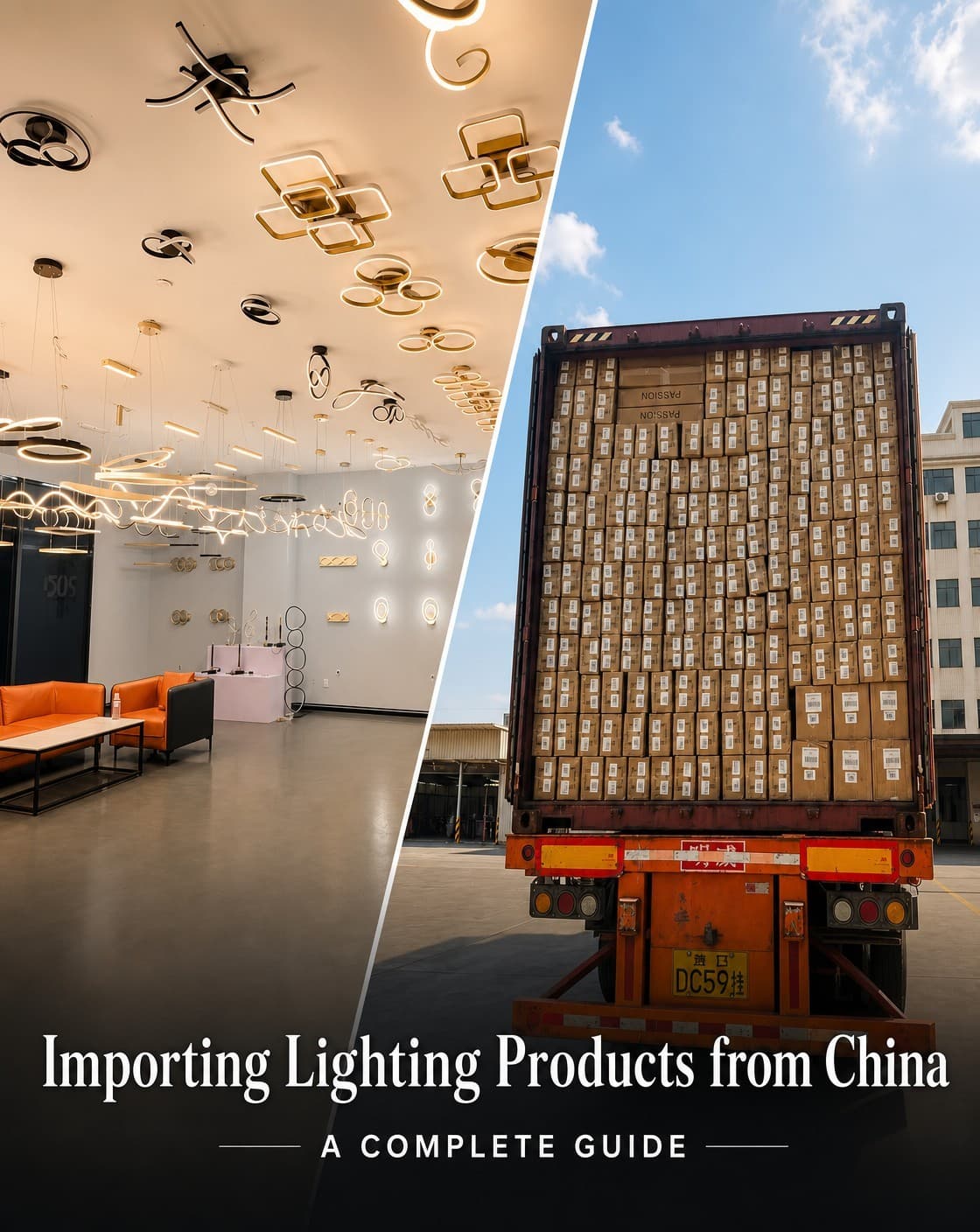
How to Import Lighting Products from China
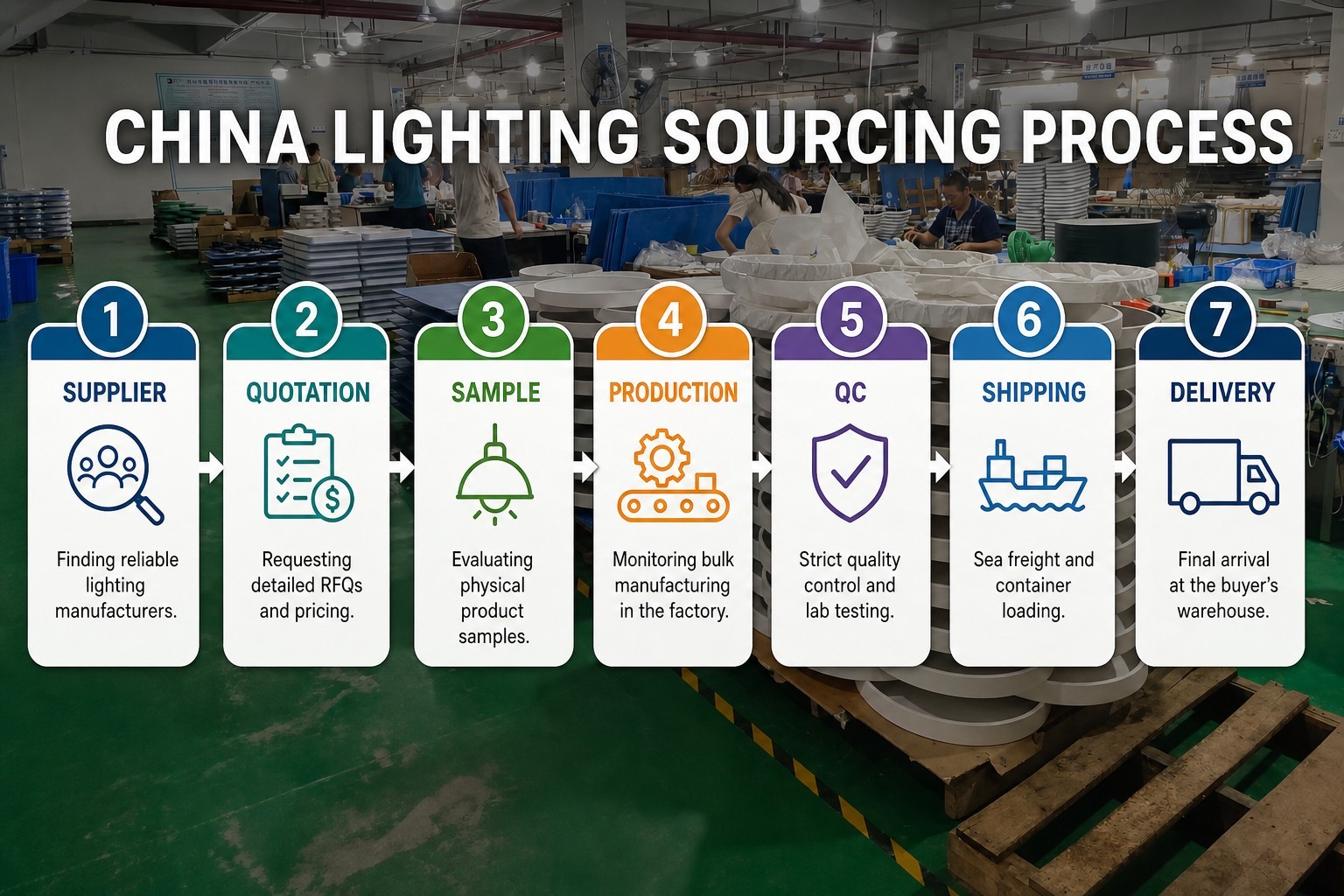
Importing lighting products from China typically involves six key stages: finding a suitable supplier, confirming product specifications, approving samples, placing the bulk order, completing quality control, and arranging international shipping and customs clearance.
China is a major manufacturing hub for residential, decorative, commercial, and architectural lighting. Buyers can source standard products as well as OEM and ODM lighting directly from manufacturers.
However, successful importing requires more than finding a low product price. Buyers should evaluate supplier capabilities, product quality, certifications, MOQ, production lead time, packaging, shipping costs, and import requirements before placing a large order.
Step 1: Define the Lighting Products You Need
Before contacting Chinese suppliers, clearly define what you want to purchase.
Your sourcing requirements may include:
Product category
Product dimensions
Materials
Colors and finishes
Wattage
Voltage
Color temperature
Lumens
CRI
Dimming requirements
Plug type
Certifications
Packaging requirements
Target quantity
Destination country
For example, instead of simply asking for "pendant lights," provide the approximate size, material, finish, lighting specification, quantity, and target market.
The more specific your requirements are, the easier it is for suppliers to provide accurate quotations.
Step 2: Find a Reliable Chinese Lighting Supplier
The next step is to identify manufacturers or wholesale lighting suppliers that match your requirements.
When evaluating a supplier, look beyond the product catalog.
Consider:
Product range
Manufacturing capabilities
OEM/ODM services
MOQ
Sample availability
Quality-control process
Certifications
Production capacity
Lead time
Packaging options
Export experience
Communication
After-sales support
A supplier with a broad product range can also simplify sourcing if you need several lighting categories from one manufacturer.
For example, one supplier may provide:
Pendant lights
Wall lights
Ceiling lights
Table lamps
Floor lamps
Mirror lights
Working with one qualified supplier can reduce communication, quality-control, packaging, and logistics complexity.
Step 3: Request a Quotation
Once you have identified potential suppliers, send them a detailed RFQ (Request for Quotation).
A useful RFQ should include:
Product model
Quantity
Product specifications
Target market
Required certifications
Packaging requirements
Branding requirements
Delivery destination
Target delivery date
Ask suppliers to provide more than just the unit price.
Request information about:
MOQ
Sample cost
Production lead time
Packaging cost
Customization cost
Tooling cost if applicable
Shipping terms
Payment terms
Certification availability
This allows you to compare suppliers based on the total purchasing cost, rather than simply choosing the lowest quoted price.
Step 4: Request Samples Before Bulk Production
Always request samples before committing to a large lighting order whenever practical.
A sample allows you to check:
Product appearance
Materials
Dimensions
Finish
Assembly
Light quality
Color temperature
Electrical components
Packaging
Installation method
If you are developing an OEM or ODM product, the sample should become the reference for mass production.
For customized products, confirm the final specifications in writing before approving the sample.
Step 5: Check Lighting Certifications and Compliance
Lighting products must meet the applicable requirements of the destination market.
The exact requirements depend on the product and country.
Depending on the market, buyers may encounter requirements or certifications such as:
CE
RoHS
ETL
UL
UKCA
Other regional requirements
Do not assume that a supplier's general certification automatically applies to every lighting model.
Ask the supplier to provide documentation for the specific product you intend to import and verify that the documentation matches the actual product configuration.
For electrical products, compliance should be considered early in the sourcing process rather than after production is complete.
Step 6: Confirm MOQ and Order Quantity
Before placing an order, confirm the supplier's MOQ.
MOQ may vary according to:
Product model
Materials
Colors
Finishes
Customization
Packaging
OEM/ODM requirements
Some suppliers may allow mixed models to meet a total order quantity, while others calculate MOQ separately for each product.
Ask:
Can different lighting models be mixed to meet the MOQ?
If you are testing products for a new market, negotiating a smaller initial order can help reduce inventory risk.
Step 7: Confirm the Final Product Specifications
Before production starts, create a clear specification sheet.
The specification should include:
Category | Details to Confirm |
|---|---|
Product | Model and design |
Dimensions | Size and weight |
Materials | Metal, glass, acrylic, wood, etc. |
Finish | Color, coating, plating |
Electrical | Voltage, wattage, driver |
Lighting | CCT, CRI, lumens |
Installation | Mounting method and accessories |
Packaging | Inner and outer packaging |
Branding | Logo, labels, manuals |
Compliance | Required certifications |
This document gives both the buyer and supplier a clear production reference.
Step 8: Approve the Pre-Production Sample
For customized or important wholesale orders, request a pre-production sample (PPS) before mass production.
The PPS should represent the final production configuration.
Compare it with the agreed requirements:
Dimensions
Materials
Finish
Electrical specifications
Lighting performance
Components
Branding
Packaging
Bulk production should begin only after the final sample and specifications have been approved.
This step can prevent expensive mistakes from being repeated across a large production run.
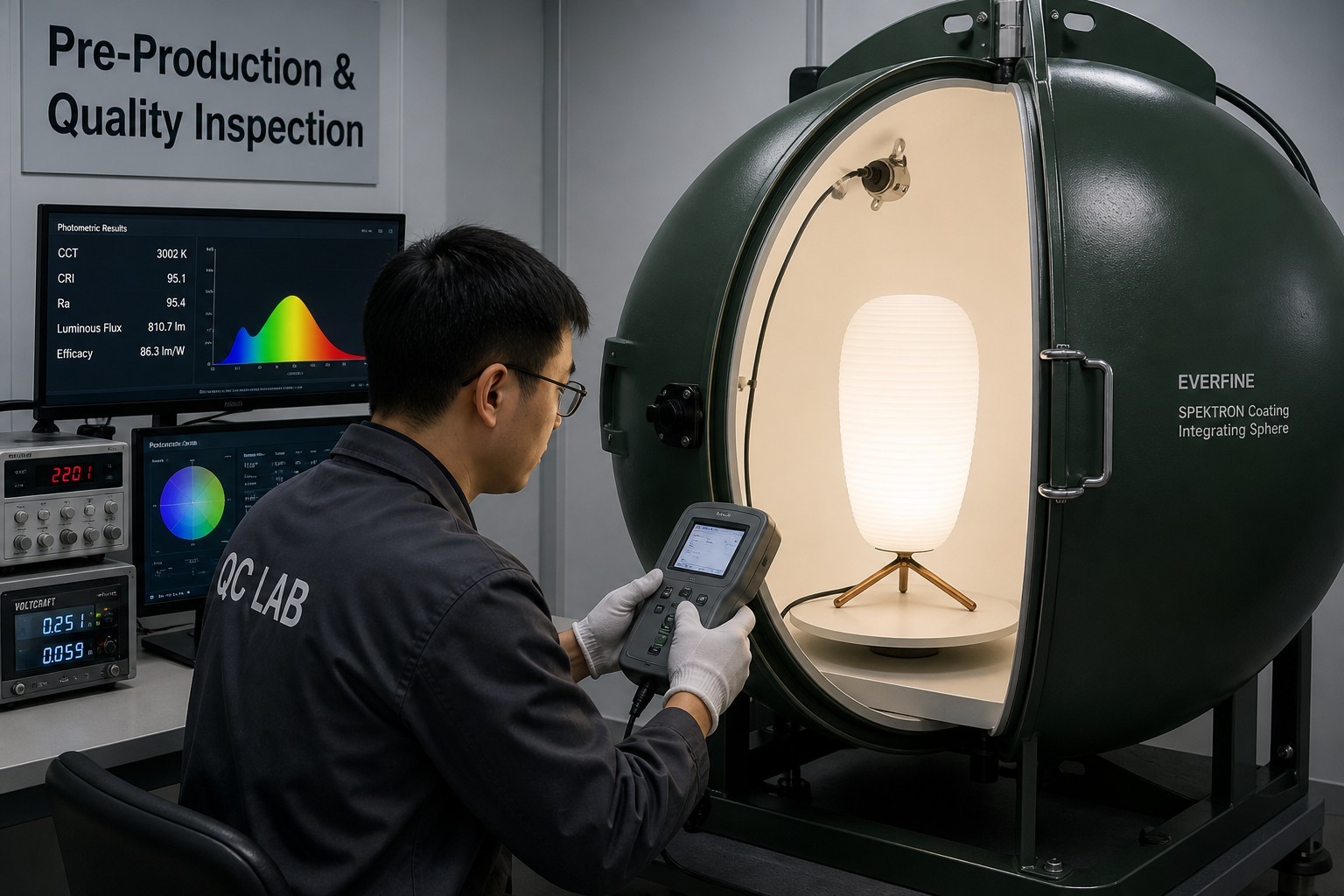
Step 9: Monitor Quality During Production
Quality control should not happen only at the end of production.
Depending on the order and product complexity, buyers can arrange inspections at different stages.
Pre-Production Inspection
Check whether the correct materials and components are ready before production.
During-Production Inspection
Check production consistency, workmanship, assembly, and major defects while manufacturing is in progress.
Pre-Shipment Inspection
Inspect finished products, quantities, packaging, labels, and shipping cartons before shipment.
For large or customized lighting orders, a structured QC process can significantly reduce the risk of receiving products that do not match the approved specifications.
Step 10: Confirm Packaging Requirements
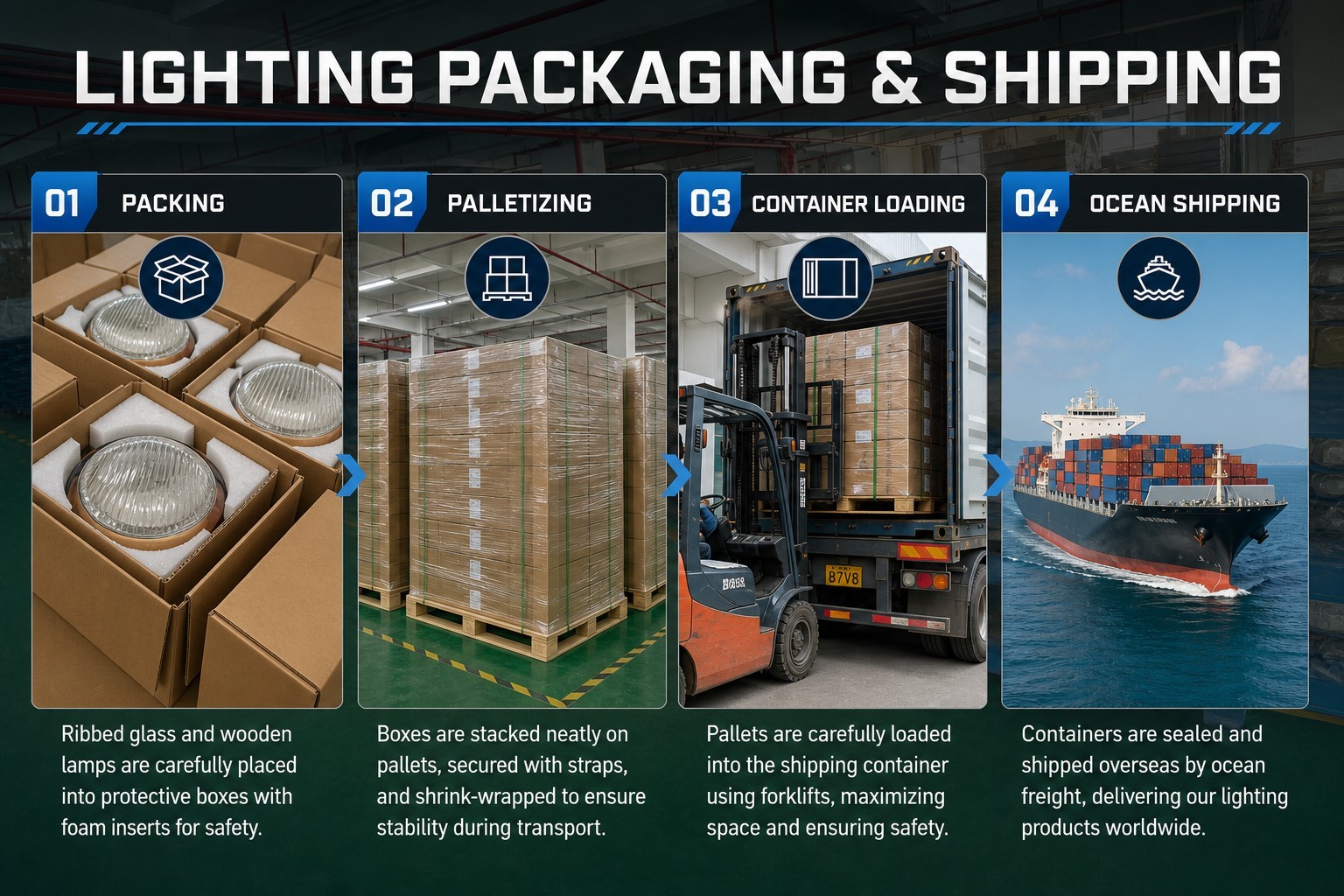
Lighting products often contain fragile components such as glass, acrylic, shades, or decorative elements.
Packaging should therefore be considered part of the product specification.
Confirm:
Inner protection
Foam or inserts
Protective film
Individual packaging
Carton dimensions
Carton strength
Accessories
Installation manuals
Shipping labels
Barcodes
Private-label packaging
If possible, test the proposed packaging before placing a large order.
Step 11: Choose the Right Shipping Method
The best shipping method depends on your order size, delivery requirements, budget, and destination.
Common international shipping options include:
Sea Freight
Generally suitable for larger and heavier lighting shipments.
Advantages may include lower transportation cost per unit for larger volumes.
Air Freight
Suitable for smaller or time-sensitive shipments.
It is generally faster but can be more expensive than sea freight.
Express Shipping
Useful for samples and very small shipments when speed is important.
Rail or Multimodal Transportation
Depending on the origin and destination, rail or combined transport may also be available.
Your supplier or freight forwarder can help determine the most suitable transportation method.
Step 12: Understand Incoterms
When importing from China, make sure you understand the shipping term included in the quotation.
Common Incoterms include:
EXW
FOB
CIF
DAP
DDP
The responsibilities for transportation, insurance, customs clearance, and other costs differ depending on the agreed term.
Do not compare supplier prices without checking whether the quotations use the same Incoterm.
A product quoted on an EXW basis cannot be directly compared with another supplier's DDP quotation without calculating the additional costs.
Step 13: Calculate the Total Landed Cost
The product unit price is only one part of the final importing cost.
Your landed cost may include:
Product Cost + Packaging + Domestic Transportation + International Freight + Insurance + Customs Duties + Taxes + Customs Clearance + Local Delivery
For example, a lighting product with a lower factory price may not actually be cheaper if it has:
Higher packaging costs
Higher shipping costs
Higher MOQ
More expensive customization
Longer lead time
Additional compliance costs
Always calculate the estimated landed cost before choosing a supplier.
Step 14: Prepare Customs and Import Documents
Depending on the destination country and shipping arrangement, import documentation may include:
Commercial invoice
Packing list
Bill of lading or air waybill
Certificate of origin where applicable
Product compliance documents
Customs declarations
Other documents required by the destination market
The exact requirements vary by country and product.
Importers should work with their customs broker, freight forwarder, or relevant authorities to confirm the documentation required for their shipment.
Step 15: Receive and Inspect the Shipment
When the goods arrive, inspect the shipment before distributing or selling the products.
Check:
Carton quantity
Product quantity
Model numbers
Visible damage
Packaging condition
Product appearance
Accessories
Labels
Electrical specifications
Random samples from different cartons
For important or high-value orders, keep records of inspection results and product defects.
Photographs and inspection records can also help when communicating with the supplier about quality issues.
Common Mistakes When Importing Lighting From China
Choosing a Supplier Based Only on Price
The lowest quotation does not necessarily provide the lowest total cost.
Skipping Samples
Bulk production without sample approval increases the risk of receiving products that do not meet expectations.
Ignoring Certification Requirements
Compliance requirements should be checked before production, not after the shipment arrives.
Not Confirming Packaging
Poor packaging can result in damaged glass, shades, or other fragile components.
Comparing Different Incoterms
EXW, FOB, CIF, DAP, and DDP quotations include different responsibilities and costs.
Not Defining Product Specifications
Verbal agreements can lead to misunderstandings. Important specifications should be documented.
Ordering Too Much Too Early
New buyers can reduce inventory risk by testing products before committing to very large quantities.
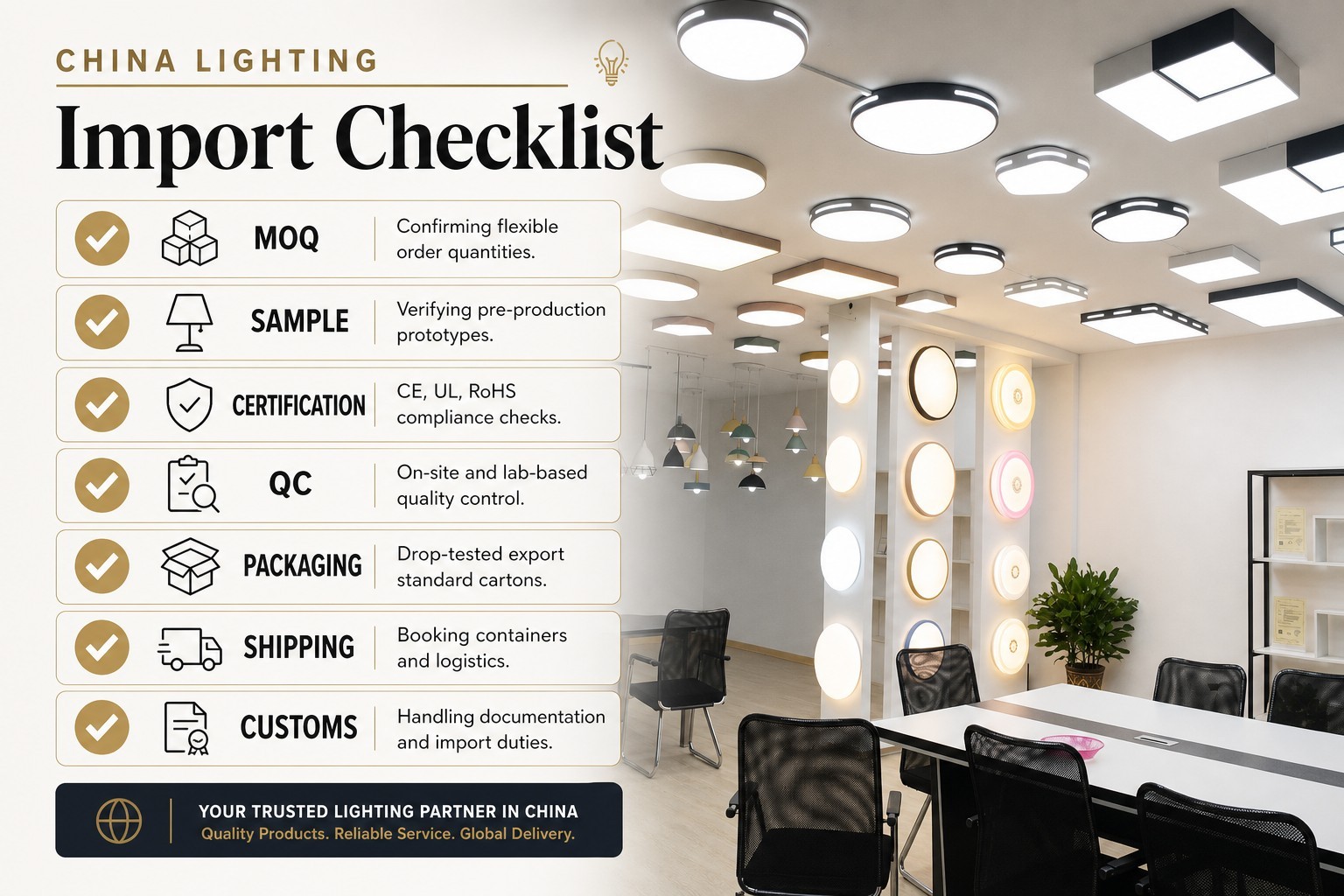
China Lighting Import Checklist
Before placing your first order, use this checklist:
☐ Define product requirements
☐ Find qualified lighting suppliers
☐ Request quotations
☐ Compare MOQ and pricing
☐ Request samples
☐ Check certifications
☐ Confirm product specifications
☐ Approve pre-production sample
☐ Confirm packaging
☐ Agree on payment terms
☐ Choose shipping method
☐ Confirm Incoterms
☐ Calculate landed cost
☐ Arrange quality inspection
☐ Prepare import documents
☐ Inspect goods after arrival
Can a Lighting Manufacturer Help With the Import Process?
Yes, an experienced lighting manufacturer can often support buyers with product documentation, packaging, quality control, export preparation, and shipping coordination.
The exact level of support varies by supplier.
Before placing an order, ask whether the manufacturer can assist with:
Product specifications
Sample development
Certification documents
Packaging
Export documents
Carton information
Quality inspection
Freight coordination
Private-label requirements
For buyers who are new to importing lighting from China, working with a supplier that understands international B2B requirements can make the sourcing process considerably easier.
Final Thoughts
Importing lighting products from China can be a practical way to source competitive products, but successful importing requires more than finding a low factory price.
The key is to manage the entire process:
Supplier Selection → Product Specifications → Samples → Compliance → MOQ → Production → Quality Control → Packaging → Shipping → Customs → Final Inspection
By establishing clear requirements before production and calculating the complete landed cost, buyers can reduce sourcing risks and make better purchasing decisions.
For wholesale, OEM, and ODM lighting projects, choosing a supplier that can support multiple stages of the process can also simplify communication and improve supply-chain efficiency.
Before choosing a supplier, buyers should also review our Wholesale Lighting Sourcing Checklist.