
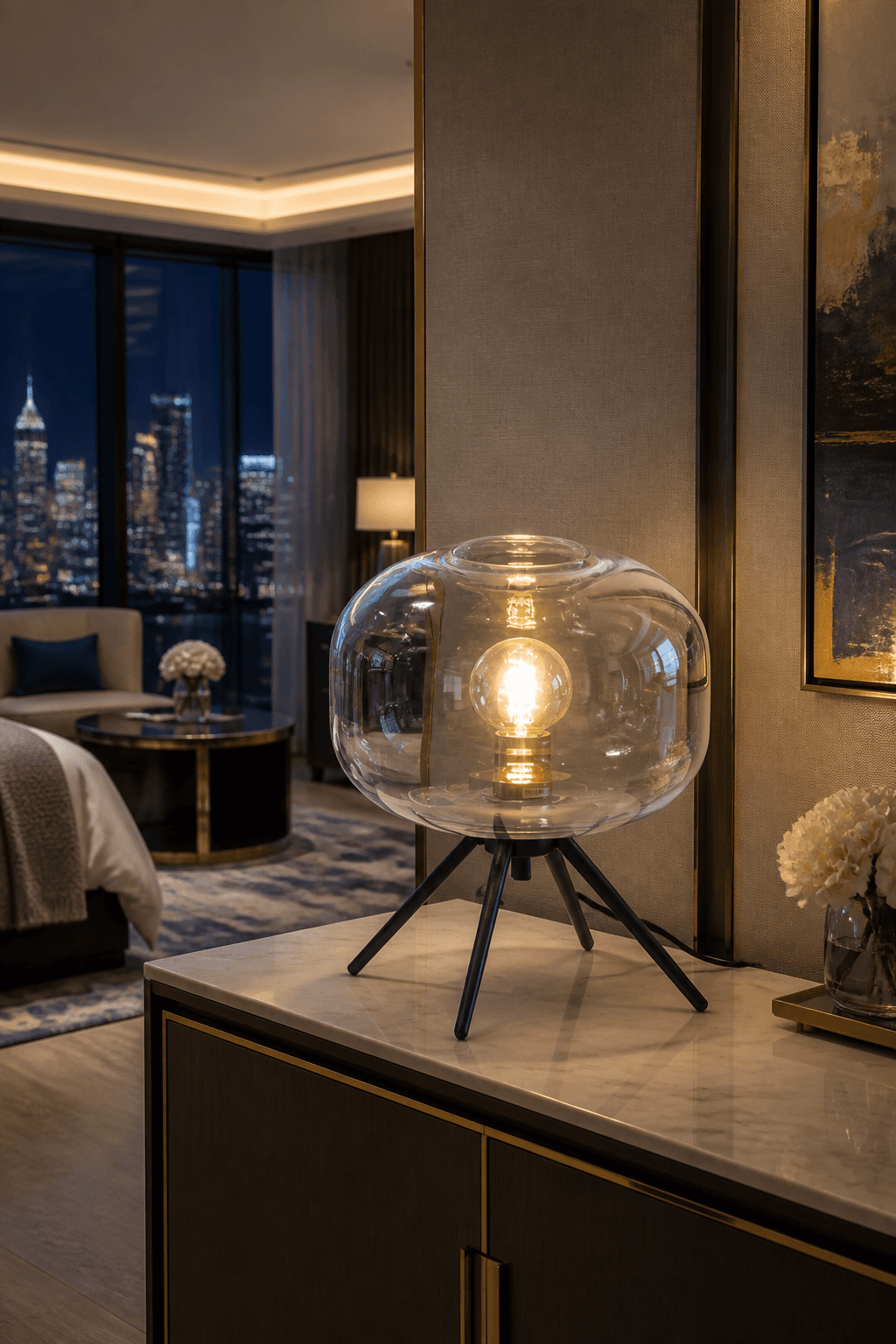
The Ultimate Buyer’s Guide to Modern Nordic & Japandi Lighting: 30 Expert Questions Answered
The intersection of Scandinavian functionality and Japanese rustic minimalism—widely known as Japandi—alongside crisp Modern Nordic design, continues to dominate global architectural and commercial interior trends. For lighting distributors, interior specifiers, and project contractors, sourcing Japandi and Nordic lighting fixtures requires balancing organic aesthetics with commercial-grade technical specs.
As a specialized China lighting manufacturer, PARSLIT brings you the ultimate sourcing guide addressing the 30 most critical technical, design, and procurement questions.
Part 1: Design Philosophy & Aesthetics
Q1: What is the main visual difference between Nordic and Japandi lighting?
Nordic lighting favors sleek metal finishes, geometric glass, cool neutrals, and functional industrial elements. Japandi lighting merges this functionality with warm natural woods, organic textures, paper-inspired shades, and muted earthy tones.
Q2: Which key materials define authentic Japandi lighting fixtures?
Natural solid woods (walnut, natural oak), textured linen, pleated fabric, matte ceramics, optical-grade acrylic, and frosted white glass.
Q3: Why are warm color temperatures essential for Nordic and Japandi interiors?
Both styles emphasize cozy comfort (Hygge) and mindful calm (Wabi-Sabi). Warm color temperatures (2700K to 3000K) evoke natural candlelight and enhance natural wood grain.
Q4: Can Japandi lighting fixtures work in modern commercial spaces?
Yes. When built with high-durability acrylics and reinforced metal frames, Japandi fixtures add inviting warmth to boutique hotel lobbies, high-end cafes, and executive suites.
Q5: How do organic silhouettes (like flowerpot, pumpkin, or lotus shapes) fit Japandi design?
Bionic and organic shapes break up modern architectural hard lines, introducing playful yet serene focal points inspired by nature.
Part 2: Technical Specifications & Optical Performance
Q6: What Color Rendering Index (CRI) should be specified for wood and ceramic lamps?
A minimum of CRI ≥ 90 (R9 > 50) is required to properly render the natural warmth of wood textures and ceramic glazes without washed-out color distortion.
Q7: What dimming protocols are best for Nordic ambient lighting?
Triac dimming works well for residential projects, while 0–10V or DALI-2 systems are recommended for commercial automation in hotel and office projects.
Q8: How do frosted glass vs. acrylic diffusers compare in Japandi pendant lights?
Frosted glass offers superior scratch resistance and premium weight, while high-transmittance optical acrylic (PMMA) provides shatterproof safety for hospitality spaces and lowers shipping weight.
Q9: Are integrated LED chips better than replaceable E26/E27 sockets for Nordic fixtures?
Integrated LEDs allow slim, seamless architectural profiles and optimized thermal management ($L_{70} > 50,000\text{ hours}$). Socketed fixtures offer easier bulb replacement for retail end-users.
Q10: What is the ideal lumen output for a Japandi ambient dining pendant?
Target 600 to 1200 lumens with a wide beam angle (≥120°) or indirect upward/downward light distribution to prevent harsh glares.
Technical Performance Matrix
Lighting Feature | Nordic Specification Standard | Japandi Specification Standard | Commercial Project Benefit |
Primary Materials | Aluminum, Iron, Frosted Glass | Walnut/Oak, Fabric, PMMA, Ceramic | Balance of structural integrity & warm aesthetics |
Color Temp (CCT) | 3000K (Warm White) / 4000K | 2700K (Soft Warm) / Tunable White | Creates relaxing, luxury hospitality environments |
Surface Finish | Matte Black, White, Brushed Brass | Natural Grain Varnish, Matte Sand | High resistance to fingerprint marks & micro-scratches |
Driver Quality | Flicker-Free ($<3\%$), High PF ($>0.9$) | Flicker-Free ($<3\%$), High PF ($>0.9$) | Prevents visual fatigue & camera strobe in commercial venues |
Part 3: Material Engineering & Durability
Q11: How do manufacturers prevent solid wood parts from warping or cracking in humid climates?
Factory-grade wood components undergo kiln-drying to achieve a precise 8%–12% moisture content, followed by multi-layer anti-moisture sealing lacquers.
Q12: What surface treatment is best for metal parts in Nordic lighting?
Powder coating and electroplating ensure a uniform matte finish resistant to oxidation and wear.
Q13: Can Japandi-style fabric shades be used in public hospitality projects?
Yes, provided the fabrics are treated with fire-retardant coatings (e.g., BS 5852 / UL 94 compliance) and water-repellent nanotech coatings.
Q14: How do you protect brass accents on Nordic fixtures from tarnishing?
High-grade brass accents receive a clear protective electrophoretic coating (E-coating) that locks out oxygen and moisture.
Q15: Are rechargeable cordless table lamps popular in Nordic/Japandi design?
Extremely popular. Minimalist cordless table lamps with wooden or metallic bases are high-demand items for outdoor dining, bedside tables, and upscale lounge bars.
Part 4: Installation & Space Planning
Q16: What is the correct hanging height for a Nordic dining room pendant?
The base of the pendant should sit 30 to 36 inches (75–90 cm) above the tabletop surface.
Q17: How do you scale a ring or dome pendant for a double-height ceiling?
Use a multi-pendant cluster or oversized single rings (1000mm+ diameter) with aircraft-grade steel suspension cables adjustable up to 3000mm.
Q18: What IP rating is required for Japandi vanity or mirror lights?
For bathroom Zone 2 installations, select fixtures with at least an IP44 rating to protect against moisture and direct splashing.
Q19: How do wall sconces complement overhead Nordic lighting?
Wall sconces provide indirect perimeter lighting, eliminating dark corners and reducing contrast glare from primary ceiling lights.
Q20: Are flush mount ceiling lights suitable for low-ceiling Japandi projects?
Yes. Compact, low-profile wooden or matte flush mount lights provide clean ambient illumination without breaking spatial flow in 2.4m ceilings.
Part 5: Quality Control & Certifications
Q21: What safety certifications are required for importing Nordic lighting to Europe?
Mandatory certifications include CE-LVD (Electrical Safety), CE-EMC (Electromagnetic Compatibility), and RoHS compliance.
Q22: What certifications are needed for North American commercial projects?
Fixtures must carry UL 1598 / ETL listings (for dry/damp locations) and FCC compliance for electronic drivers.
Q23: What testing procedures should a lighting factory conduct before shipping?
A reliable factory performs a 24–48 hour continuous burn-in aging test, high-voltage insulation breakdown tests, and drop-tests for protective packaging.
Q24: How does PARSLIT ensure CCT consistency across large project orders?
We enforce strict LED binning processes (within 3-step MacAdam ellipses) so all fixtures share identical color warmth.
Q25: Why is driver thermal dissipation crucial for acrylic dome lights?
Heat build-up can discolor acrylic over time. Aluminum driver housings and thermal pads prevent yellowing and driver failure.
Part 6: B2B Sourcing, OEM & Customization
Q26: Can PARSLIT customize wood finishes to match client interior furniture samples?
Yes. As an OEM manufacturer, we match wood stain samples (Walnut, Oak, Ash, Natural Beech) to custom project specifications.
Q27: What is the typical MOQ for custom OEM Nordic lighting orders?
PARSLIT offers flexible low MOQs for trial orders and commercial project mock-ups, allowing distributors to test market response easily.
Q28: How are delicate wood and glass Nordic fixtures packaged for ocean freight?
Every fixture is packed using custom-molded high-density EPS foam, reinforced corner guards, and 5-ply corrugated master cartons suitable for drop-testing.
Q29: Can we order mixed-container shipments containing ceiling lights, wall lamps, and table lamps?
Yes. Consolidated sourcing is one of our core strengths, allowing buyers to combine multiple SKUs into a single container order.
Q30: How do I request samples and CAD spec sheets for my upcoming hotel project?
Contact our engineering and sales team directly at [email protected] with your project specs or drawing files for 24-hour turnaround quotes.
Partner with PARSLIT for Modern Nordic & Japandi Sourcing
Whether you are expanding your distributor catalog or specifying lighting for an upcoming hospitality build, PARSLIT delivers documented factory direct quality, complete certification packages, and flexible OEM customization.
Explore our full product lineup today:
Browse our Ceiling Lights, Wall Lights, and Table Lamps, or reach out to us at
[email protected]to discuss your custom sourcing requirements.