
What Is MOQ in Lighting?
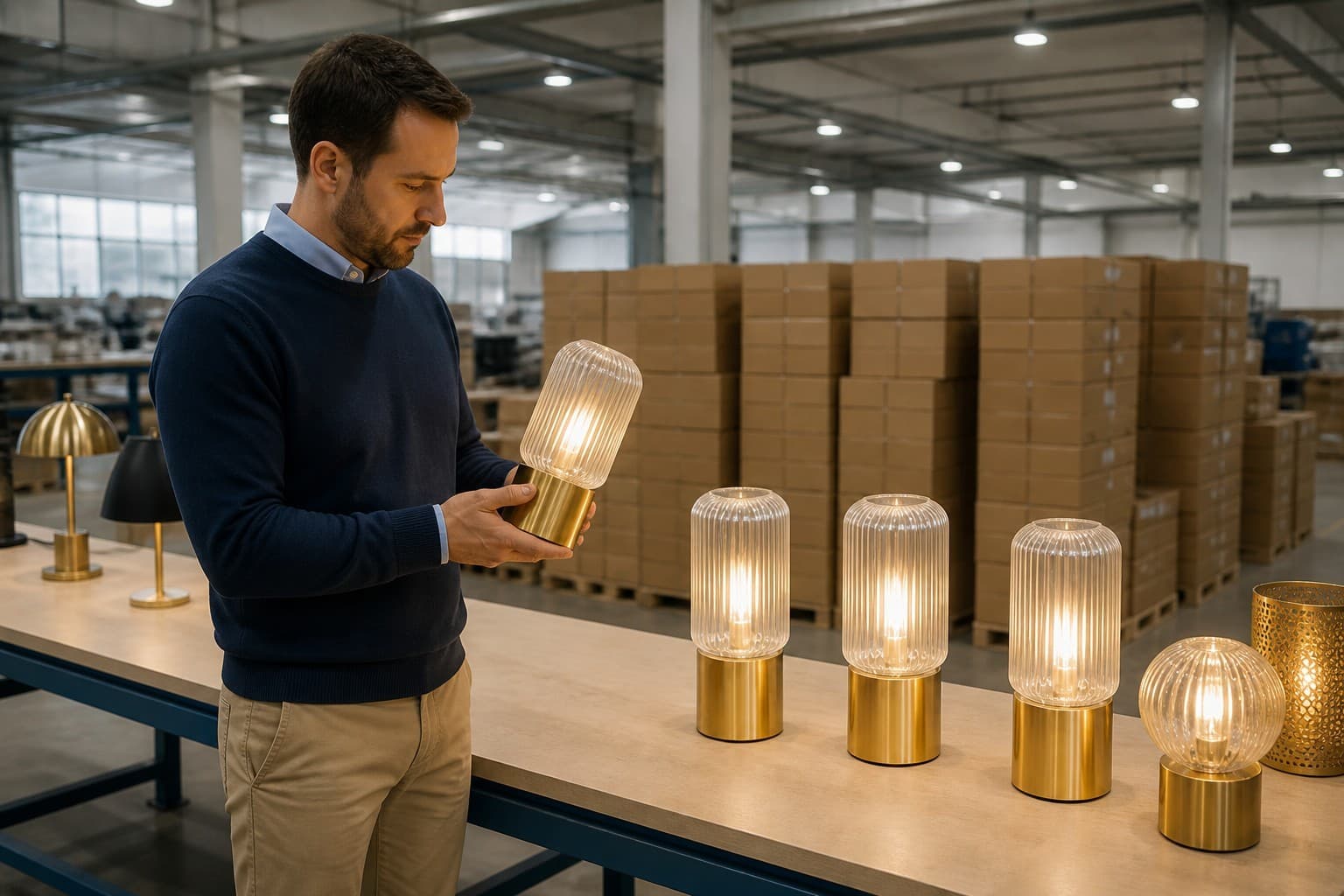
MOQ stands for Minimum Order Quantity. In the lighting industry, it refers to the minimum number of units a supplier requires a buyer to order for a specific product or production run.
For example, if a lighting manufacturer sets an MOQ of 100 pieces for a pendant light, a buyer generally needs to order at least 100 units of that model.
However, lighting MOQ is not always a fixed number. It can vary depending on the product, materials, customization, packaging, production process, and order quantity.
Understanding MOQ before requesting a quotation can help wholesale buyers, distributors, retailers, interior designers, and project contractors plan their purchasing more efficiently.
Why Do Lighting Manufacturers Have MOQs?
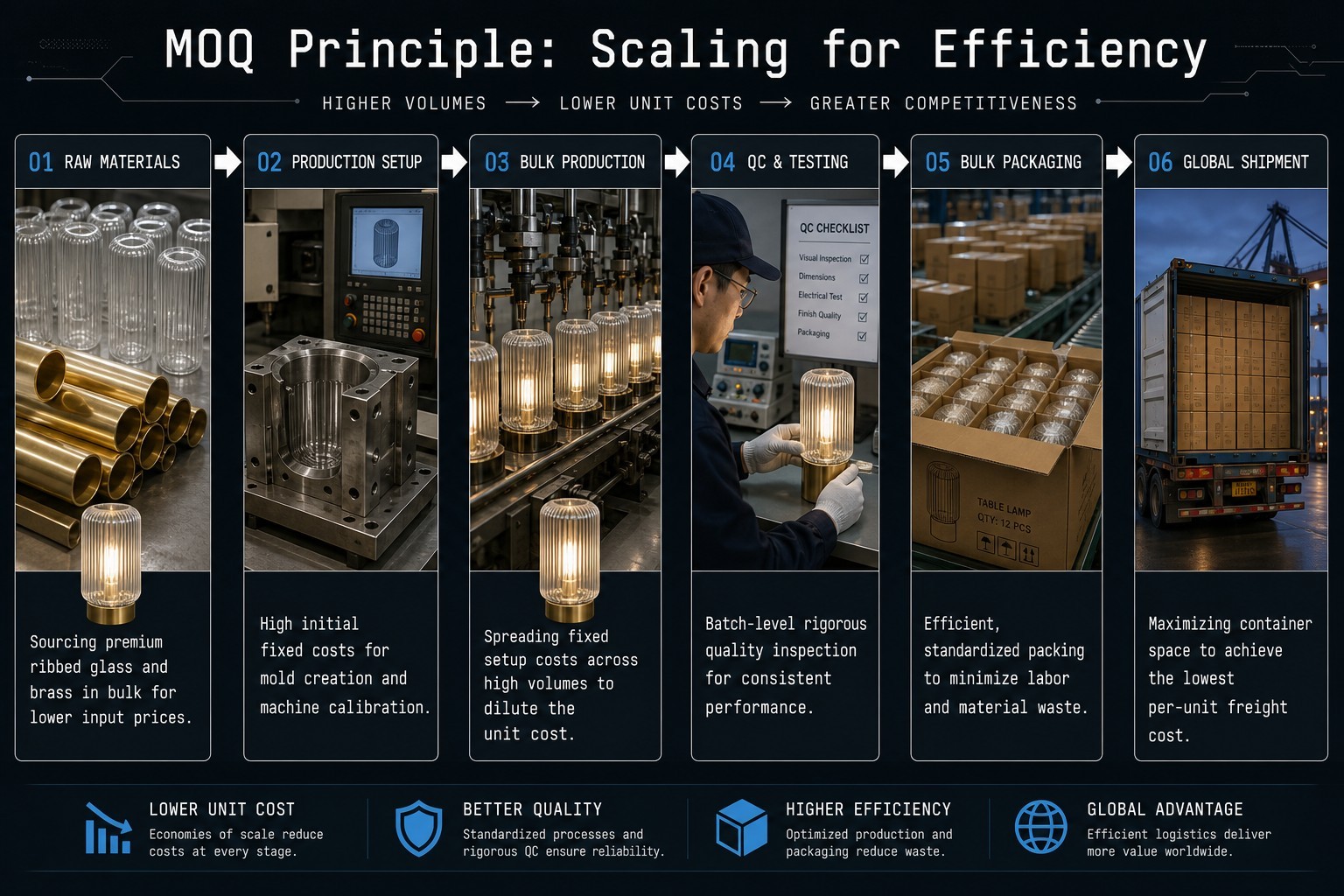
Lighting manufacturers use MOQs mainly to make production economically viable.
A lighting product may require costs for:
Raw materials
Metal or aluminum processing
Glass production
Surface finishing
Molds and tooling
LED components
Electrical components
Assembly
Quality control
Packaging
Production setup
Some of these costs remain similar whether a factory produces 20 units or 200 units.
For this reason, manufacturers may establish a minimum quantity to spread production and setup costs across enough units to maintain competitive pricing.
MOQ is therefore not simply a restriction on buyers. It is often a way for manufacturers to manage production efficiency and costs.
What Factors Affect Lighting MOQ?
There is no universal MOQ for all lighting products. The required quantity can change depending on several factors.
1. Product Type
Different lighting products may have different production requirements.
For example:
A standard product that is already in production may have a lower MOQ than a completely customized product.
2. Materials
Materials can significantly affect MOQ.
Products using standard materials and finishes are generally easier to produce in smaller quantities.
Customized materials, special finishes, custom glass, or unusual colors may require larger quantities because the manufacturer needs to purchase or prepare dedicated materials.
3. OEM/ODM Customization
OEM and ODM projects usually have higher MOQs than standard products.
Customization may involve:
Dimensions
Colors
Materials
Surface finishes
LED specifications
Light source
Voltage
Cable length
Product structure
Logos
Packaging
The more customized a product is, the more likely it is that the supplier will require a higher MOQ.
4. Private-Label Packaging
Customized packaging can also affect MOQ.
If a buyer requires branded cartons, printed boxes, labels, instruction manuals, or other private-label materials, the manufacturer may need to purchase packaging materials in larger quantities.
5. Production Setup
Some products require additional setup before manufacturing can begin.
For example, a customized lighting project may require new tooling, molds, production fixtures, or special finishing processes.
In these cases, the supplier may establish a higher MOQ or charge a separate setup or tooling fee.
Typical Lighting MOQ by Order Type
MOQ varies significantly between suppliers, so the following should be treated as a general purchasing framework rather than a universal industry standard.
Order Type | Typical MOQ Situation |
|---|---|
Standard stock products | Often lower MOQ |
Standard wholesale products | Low to medium MOQ |
Mixed-model orders | May depend on total quantity and supplier policy |
Private-label packaging | Usually requires additional quantity |
OEM customization | Usually higher MOQ |
ODM development | Often higher MOQ |
Fully customized lighting | Typically the highest MOQ |
Always confirm the actual MOQ with the supplier because requirements vary by product and manufacturer.
Can I Mix Different Lighting Models to Meet the MOQ?
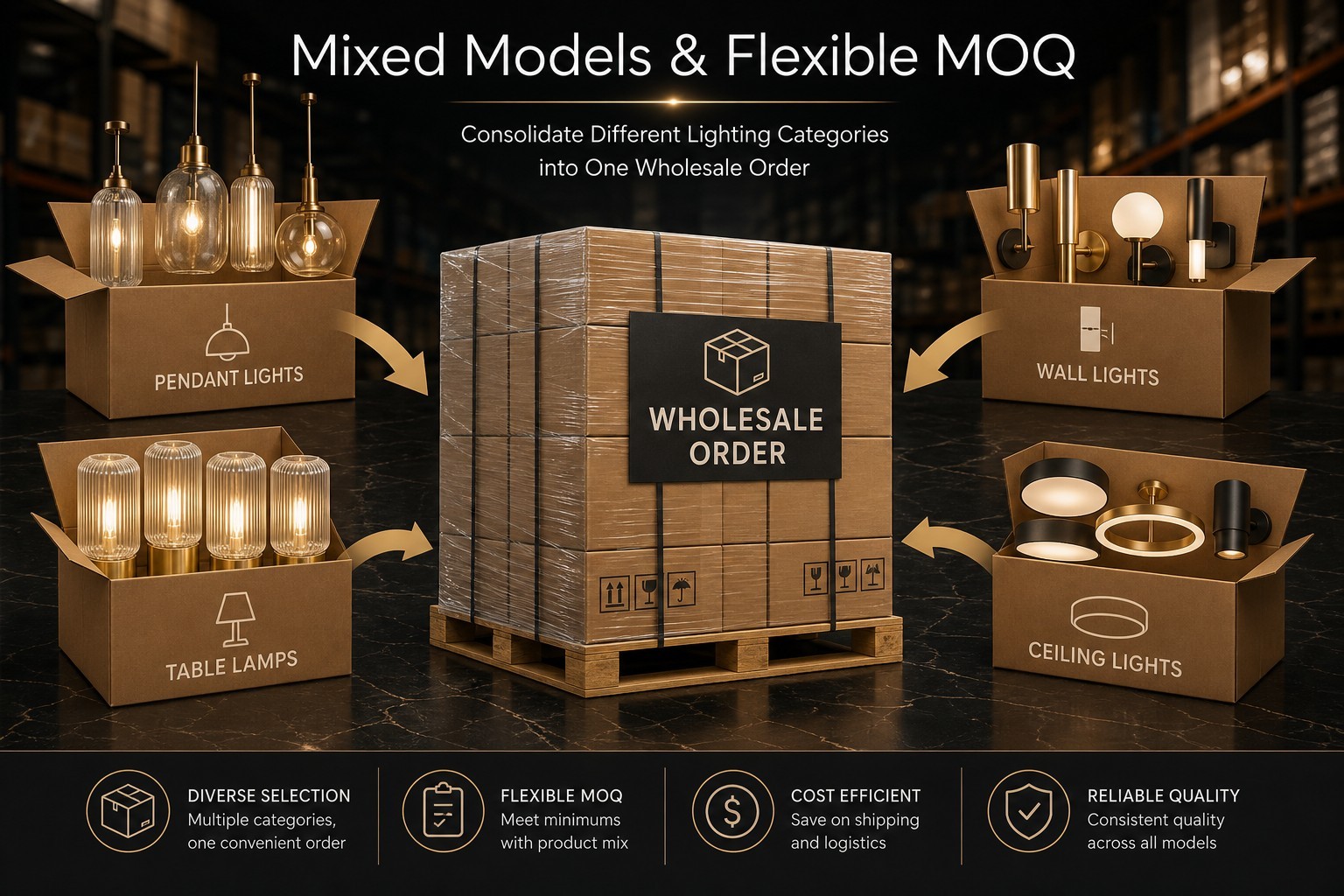
Sometimes. Some lighting manufacturers allow buyers to combine different models within one order, while others calculate MOQ separately for each product.
For example, a supplier may require:
50 pieces per model
or may allow:
200 pieces total across multiple models
The second option can be particularly useful for distributors and retailers that want to test several designs without purchasing a large quantity of every individual model.
When requesting a quotation, ask:
"Can I mix different lighting models to meet the total MOQ?"
Also confirm whether different colors, sizes, or finishes are counted separately.
Is a Lower MOQ Always Better?
Not necessarily. A lower MOQ can reduce inventory risk, but it may also come with a higher unit price.
Manufacturers often achieve better production efficiency when producing larger quantities. As a result, a supplier offering a very low MOQ may have less competitive pricing.
When comparing suppliers, buyers should evaluate the total purchasing cost rather than MOQ alone.
Consider:
Unit price
MOQ
Sample cost
Tooling cost
Packaging cost
Shipping cost
Production lead time
Product quality
Certifications
After-sales support
A supplier with a slightly higher MOQ may actually offer better overall value if the product quality and pricing are more competitive.
How Can I Negotiate a Lower Lighting MOQ?
There are several practical ways to negotiate MOQ with a lighting manufacturer.
Start With Standard Products
Standard products usually require less customization and may be available at a lower MOQ.
If you are testing a new supplier, starting with existing designs can reduce the initial purchasing commitment.
Combine Multiple Models
Ask whether several models can be combined into one total order quantity.
For example, instead of ordering 100 pieces of one model, you may be able to order 20–30 pieces across several models.
Accept Standard Materials
Using the supplier's existing colors, finishes, components, and packaging can help reduce additional production requirements.
Increase the Order Gradually
If you expect long-term cooperation, discuss a trial order first and explain your expected future purchasing volume.
Manufacturers may be more flexible when they see potential for repeat orders.
Separate Product MOQ From Packaging MOQ
Sometimes the product MOQ and customized packaging MOQ are different.
You may be able to purchase the products in a smaller quantity while using standard packaging for the first order, then introduce private-label packaging after sales volume increases.
MOQ vs. MOV: What Is the Difference?
MOQ and MOV are not the same.
MOQ (Minimum Order Quantity) refers to the minimum number of units a supplier requires you to purchase.
MOV (Minimum Order Value) refers to the minimum monetary value of an order.
For example:
MOQ: 100 pieces
MOV: US$3,000
A supplier may require you to meet one or both conditions.
Understanding this difference is important when comparing wholesale lighting suppliers because a supplier with a low product MOQ may still require a minimum total order value.
What Should I Ask a Lighting Supplier About MOQ?
Before placing a wholesale lighting order, ask the supplier these questions:
What is the MOQ for each lighting model?
Can different models be mixed to meet the MOQ?
Are different colors or finishes counted separately?
Does OEM/ODM customization require a higher MOQ?
Is the MOQ different for private-label packaging?
Is there a minimum order value in addition to the MOQ?
Can I place a smaller trial order?
Will the unit price decrease at higher quantities?
Are sample and tooling costs separate from the MOQ?
What is the production lead time at the requested quantity?
These questions can help you understand the actual purchasing requirements before committing to an order.
How to Choose the Right MOQ for Your Business
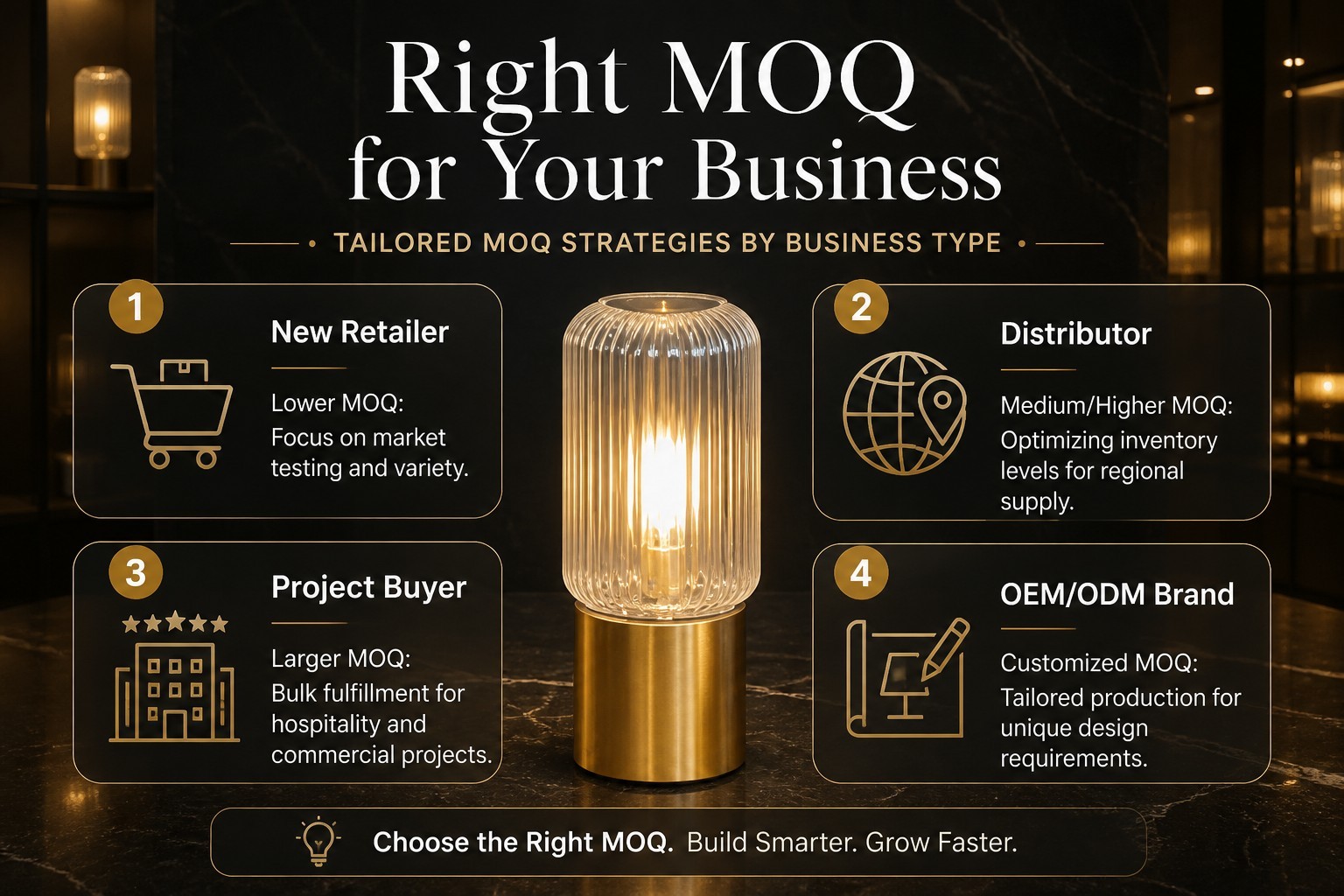
The right MOQ depends on your business model, sales volume, inventory capacity, and product strategy.
For New Retailers
A lower MOQ can reduce inventory risk when testing new products.
For Established Distributors
A higher MOQ may be acceptable if the product has stable demand and the larger quantity provides better pricing.
For E-commerce Sellers
It can be useful to start with smaller quantities, test market demand, and increase order volumes after identifying best-selling products.
For Hospitality and Interior Projects
Project-based buyers may have larger and more predictable requirements, making higher MOQs easier to manage.
For OEM/ODM Brands
A higher MOQ may be necessary to support custom product development, materials, tooling, and branded packaging.
Final Thoughts: MOQ Is Only One Part of Supplier Evaluation
MOQ is an important factor when choosing a wholesale lighting supplier, but it should not be the only consideration.
A good supplier should provide a reasonable balance between MOQ, product quality, pricing, customization capabilities, certifications, production capacity, lead time, and communication.
Before placing a large order, request samples, confirm specifications, clarify MOQ requirements, and understand all additional costs.
For buyers developing a long-term lighting product line, discussing MOQ directly with the manufacturer can often lead to a more flexible and cost-effective purchasing arrangement.
Before choosing a supplier, buyers should also review our Wholesale Lighting Sourcing Checklist.